Services / Capability development
Build the capability your procurement strategy depends on
Equip your people to make sound decisions, manage suppliers and deliver commercial outcomes. Comprara brings together assessment, eLearning, facilitated training and coaching to build capability around your organisation's priorities.
From focused development to a tailored procurement academy, we connect what people learn with what they need to do at work.
Develop the skills your next challenge demands
A new strategy, operating model or technology changes what you need from your people. Established teams also need opportunities to deepen their expertise, challenge familiar approaches and prepare for greater responsibility.
We help you identify where development will make a difference: a team taking on more complex sourcing, contract managers facing greater supplier risk, or business stakeholders making purchasing decisions without a consistent foundation.
The starting point is the work your organisation needs to perform and the capability required to perform it well.
What a procurement capability model is
A procurement capability model sets out the skills, knowledge and behaviours each role needs, at each level of seniority. It gives assessment something to measure against and gives development a target.
We agree the model with you first, using your roles and priorities, so that learning is aimed at what the work requires and not at a generic curriculum.
Procurement eLearning, built around the role
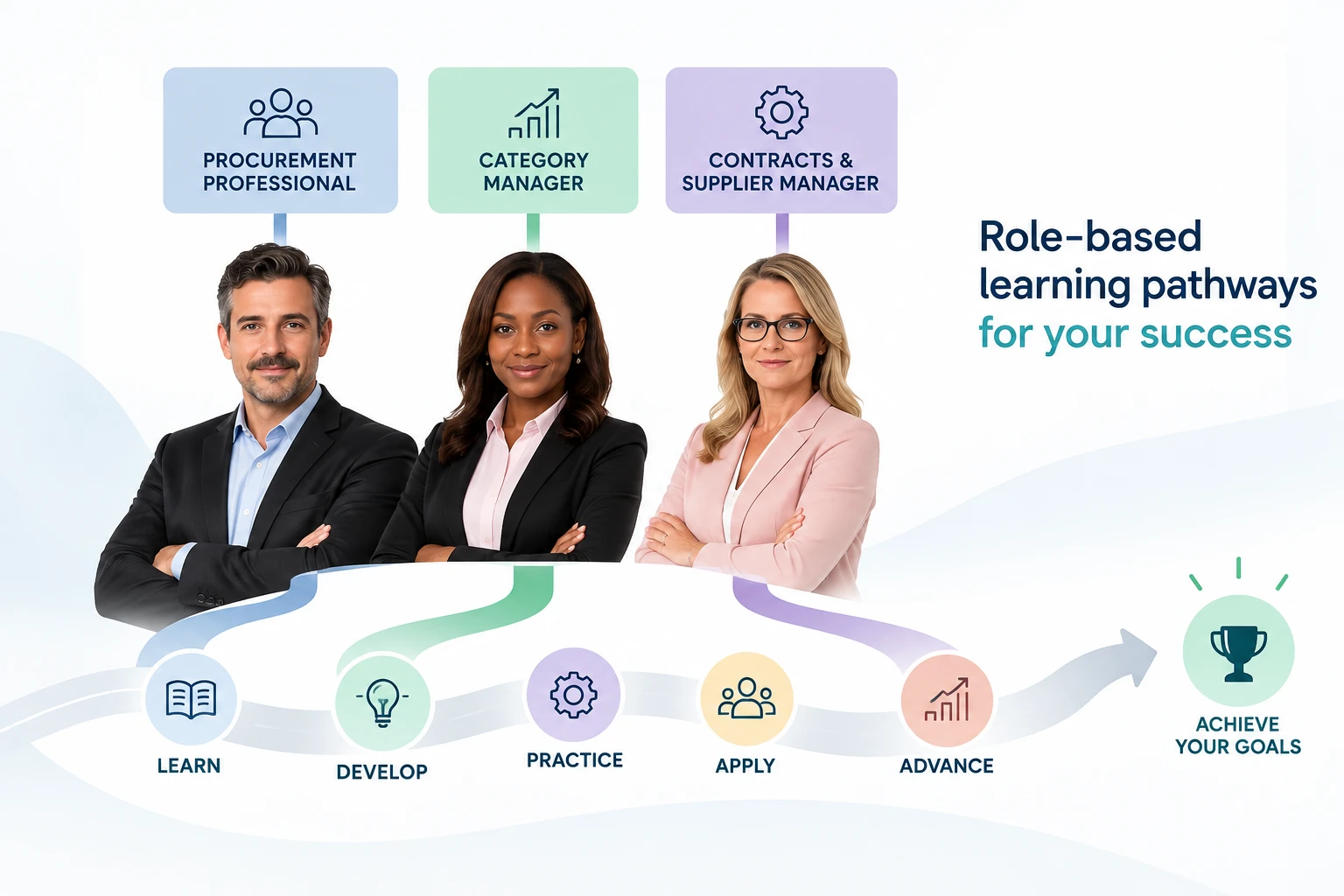
Through Academy of Procurement, your team can access structured digital learning across the procurement lifecycle. Learning pathways reflect different responsibilities and experience levels, with assessment helping to identify where individuals should focus.
Relevant learning pathways
Give buyers, analysts, category specialists, contract managers and leaders a route suited to their work. Build common foundations while allowing people to develop the expertise their role demands.
Practice alongside knowledge
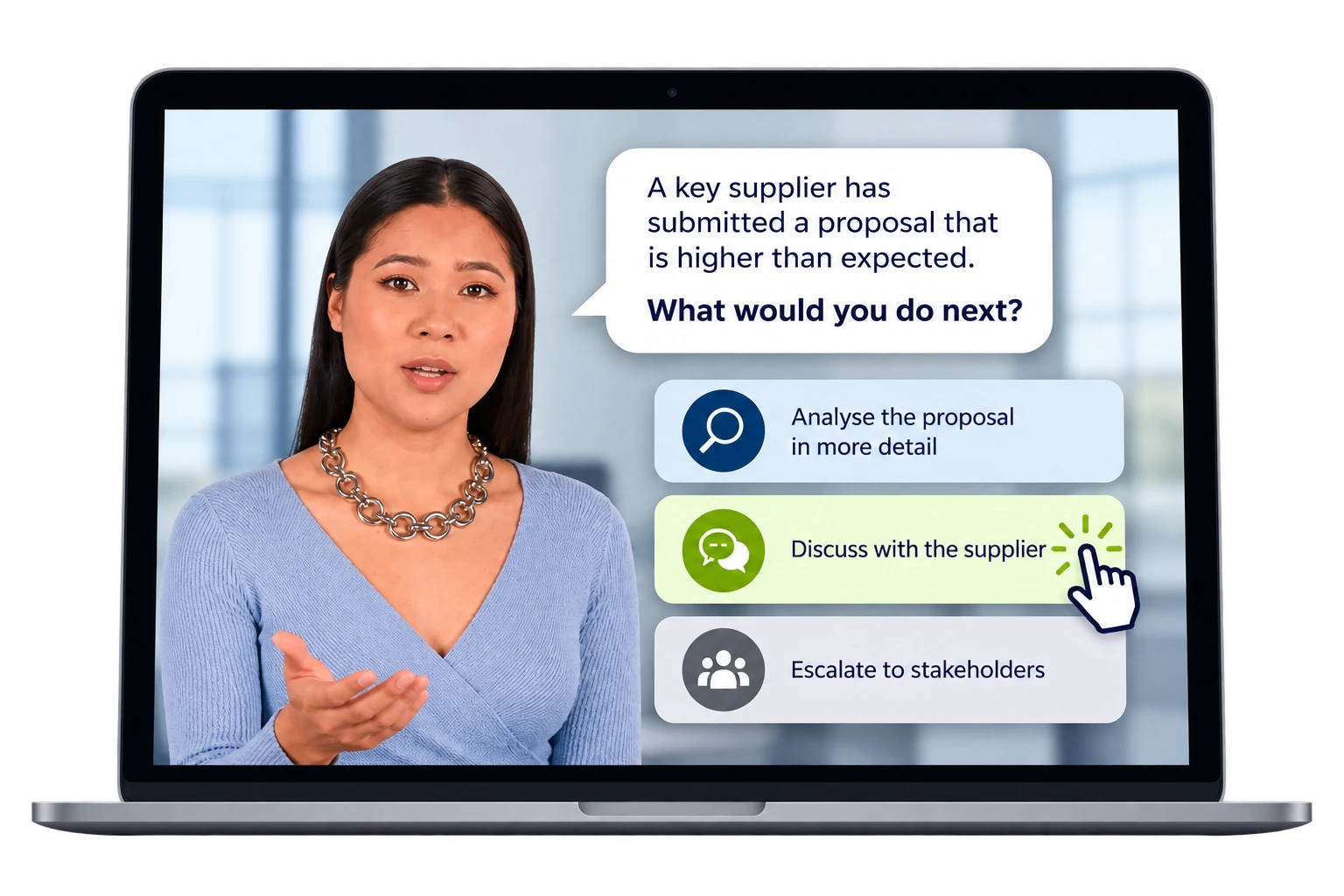
Combine video learning with scenarios, simulations, quizzes and practical resources. Give learners opportunities to test their understanding and revisit techniques when they need them.
Visibility for team leaders
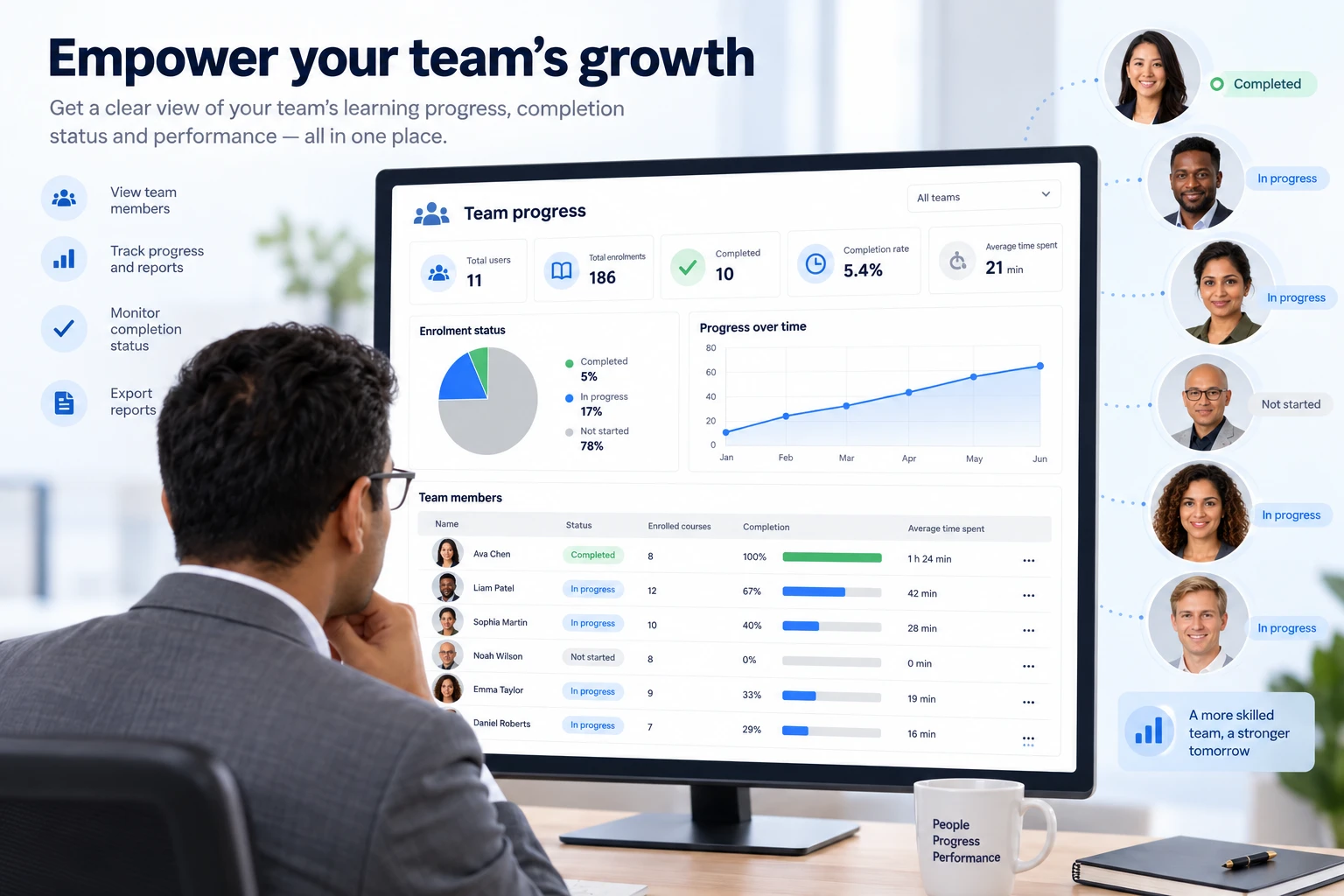
Track progress against learning plans and identify where participation or further support needs attention. Use that evidence to guide development conversations and the next stage of learning.
Part of a wider development programme
Use digital learning on its own or combine it with facilitated workshops and coaching. Shared preparation allows group sessions to focus on questions, practice and the organisation's own challenges.
Strengthen the decisions people make every day
Learning can focus on a particular skill or span the responsibilities of a role.
- Sourcing and category management
- Understand requirements, assess markets and develop a considered sourcing approach.
- Negotiation and commercial acumen
- Prepare positions, examine trade-offs and make a clear commercial case.
- Contracts and supplier relationships
- Set expectations, manage performance and respond to issues throughout the relationship.
- Cost, finance and analysis
- Interpret cost drivers and use evidence to evaluate alternatives.
- Procurement foundations and governance
- Establish consistent purchasing practices and understand responsibilities.
- Leadership and stakeholder influence
- Build alignment, communicate recommendations and lead the procurement agenda.
Design the programme around your organisation
Establish what good looks like
Clarify the roles, decisions and business priorities the programme must support. Agree the capabilities required and where stronger performance would make the greatest difference.
Identify the development priorities
Use existing evidence or SkillsGAP Analysis to understand strengths and gaps. Interpret the findings in the context of your team, rather than treating every assessment result as a training requirement.
Create the right learning mix
Bring together digital learning, practitioner-led workshops, coaching and workplace activities. Set a manageable pace, with clear expectations for learners and their managers.
Apply, review and build further
Give people opportunities to apply learning to relevant work and receive feedback. Review participation, assessment evidence and the quality of agreed work outputs to decide what support comes next.
Make development relevant to the work
A programme can connect learning to the documents, conversations and decisions your people are already responsible for.
For example, a category manager might use a current category plan to practise market analysis and test a recommendation. A contract manager might review supplier measures and prepare for a performance conversation. A buyer might compare competing offers and explain the trade-offs to a stakeholder.
These activities create a practical basis for feedback. They also help managers see where new knowledge is being applied and where more support is needed.
Procurement expertise, connected to development
Academy of Procurement is brought to you by Comprara. Together with SkillsGAP Analysis, it connects specialist learning and assessment with the consulting experience of people working on procurement problems.
That means development can reflect the expectations, constraints and decisions your team encounters, and support wider changes in how procurement operates.
Explore the Academy of Procurement →Start at the scale you need
A focused team programme
Address a defined priority such as negotiation, contract management or category planning, with learning and practice shaped around the team.
An eLearning programme
Provide a structured learning foundation across locations and roles, with agreed pathways and visibility of progress.
A tailored procurement academy
Bring assessment, learning pathways, workshops and coaching into a coordinated programme that supports your organisation's longer-term capability needs.
Questions about capability development
Do we need an assessment before starting?
Not always. Where the need is clear, a focused programme may be appropriate. Assessment is useful when you need a consistent baseline, are working across different roles or want evidence to guide a larger investment.
Can the programme reflect our roles and ways of working?
Yes. We agree the required capabilities, learning priorities and relevant workplace activities with you. The scope of content tailoring and facilitation is defined when the programme is designed.
Can people outside the procurement team participate?
Yes. Development can include people who buy, manage contracts or work with suppliers as part of a broader role, with learning matched to their responsibilities.
How do we know whether it is working?
We agree what progress should look like at the outset. Learning participation and assessment provide part of the picture; manager feedback and relevant work outputs help show how learning is being applied. Business outcomes need to be considered alongside other changes affecting performance.
What does your team need to do better?
Tell us about your team, the challenge ahead and the changes you want to see in practice. We will help identify a useful starting point and the right combination of assessment, learning and support.