
Purchase Audit Excellence &
Strong Governance
Detect and seal operational leaks
Ensure impermeable operations
with Procurement audits and
enhanced governance controls
Improvements through audit
Governance is less about the mechanics and more about the dynamics.
Contracts do not belong in the bottom draw.
Although it seems the hard work is done once contracts are signed, it’s not. The terms of the contract need to be operationalised – and made real for stakeholders and suppliers alike.
Yet, it doesn’t always happen this way. People come and go, conditions change. What was agreed may be overlooked… until a problem emerges. It could be small like spend leakage or order splitting and sometimes more serious, like fraud. Proactivity in your audit and compliance is the way to minimise such risks.
Comprara is the Lead Reviewer, Auditor and Accreditor for various programs. In this capacity we make an expert assessment of the procurement function We focus on how an organisation can improve its controls, practices and processes around delegations and authority. We look for risk and recommend resolution.
Take action to keep your operation air tight.

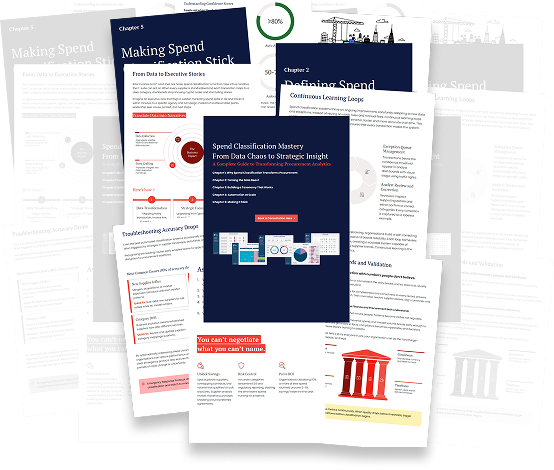
Get your Complimentary Category Strategy Tool!
Sign-up here and you will receive it
by email a few minutes later.
No strings attached.
Procurement Consulting Services







Audit & Governance

Your Local Leading Procurement Consultants
As Australian-based procurement consultants with national reach, we understand the nuances of local industries and government procurement requirements alike.

Government
organisations
View here >>
Publicly listed
companies
View here >>
Not-for-profit
organisations
View here >>
Privately owned
business
View here >>Procurement: Thought Leadership
From our collaborators who love open source thinking and participation.
Blog >
What the Next-Generation Procurement Leader Needs to Master
Procurement Leaders who stall at enterprise scale are usually technically strong. This article maps the six capability domains where that conversion breaks down: enterprise finance fluency, strategic leadership, stakeholder influence and governance, digital operating judgment, risk translation, and leadership pipeline. It also names what a well-targeted development investment should actually…
Read more.

Measurement Architecture: The Missing Discipline in Procurement Transformation
Effective procurement transformation relies on a robust measurement architecture established at the very beginning of the process, not as an afterthought. While organisations often rely solely on financial savings, these figures are frequently disputed by finance departments if they lack verified baselines or audit integrity. A comprehensive evaluation must also…
Read more.

Designing the procurement transformation roadmap: why sequence matters as much as strategy
Many procurement transformation roadmaps are project plans wearing a different label. They list initiatives. They assign owners. They set timelines and track completion. What they do not do is explain the logic of why the initiatives sit in that order, what the sequencing depends on, or what needs to be…
Read more.

From Vibes to Ground Truth: Why Procurement Savings Claims Fail Finance Scrutiny
Why most procurement decisions cannot survive a serious question from finance. The short version. Most procurement savings claims fall apart under a finance review. The reason is foundational: spend data is partial, supplier records are stale, baselines are missing, and the working is held in someone’s head. This article shows…
Read more.
Frequently Asked Questions
-
What is a procurement audit, and why is it necessary?
A procurement audit is an independent, systematic review of an organisation’s sourcing strategy, controls, compliance, and operational execution. It validates whether procurement delivers on its commitments — financially, ethically, and strategically.
Procurement audits are necessary because they provide:
- Compliance Assurance – Verifying adherence to internal policies, regulations, and supplier codes of conduct, safeguarding against fines and reputational risk.
- Risk Identification – Exposing vulnerabilities such as supplier concentration, dependency, or weak internal controls.
- Financial Integrity – Testing approvals, POs, invoice matching, and savings realisation to prevent leakage, fraud, or misreporting.
- Process Optimisation – Identifying inefficiencies, cycle-time bottlenecks, or under-utilised digital tools.
- ESG & Ethics Verification – Auditing supplier sustainability, labour standards, and diversity commitments.
- Stakeholder Assurance – Providing boards, regulators, and investors with evidence of robust controls and value delivery.
In essence, procurement audits are not just about compliance — they are a value assurance mechanism, ensuring procurement contributes to resilience, trust, and competitive advantage.
Comprara provides independent procurement reviews and assessments, ensuring organisations not only comply but also capture untapped value and resilience opportunities.
-
How does governance improve procurement transparency?
Strong governance is the foundation of procurement transparency, embedding clarity, accountability, and trust into every decision.
Governance improves transparency through:
- Clear Authority Frameworks – Defining decision rights, approval limits, and escalation paths by spend and risk level.
- Standardised Reporting – Regular dashboards covering spend, supplier risk, ESG performance, and savings delivery.
- Documented Policies – Codifying sourcing processes, supplier codes of conduct, and conflict-of-interest rules.
- Audit Trails & Digital Controls – Enforcing compliance through system-based workflows and immutable records.
- Stakeholder Engagement – Committees, business reviews, and governance forums ensure cross-functional alignment.
- Performance Disclosure – Publishing KPIs to leadership, audit committees, and in some cases, external sustainability reports.
- Conflict Management – Identifying, disclosing, and mitigating potential conflicts of interest.
- Exception Management – Formal mechanisms to flag, escalate, and resolve unusual transactions or breaches.
Effective governance turns procurement into a trusted partner of the business, ensuring transparency for regulators, shareholders, and customers.
Comprara helps organisations strengthen procurement governance, from policy frameworks to performance dashboards, ensuring transparency and trust at every level.
-
What risks can be identified through a procurement audit?
Procurement audits act as a risk radar, scanning across financial, operational, strategic, and reputational exposures. Risks identified typically include:
- Financial Risks – Unauthorised spend, duplicate payments, budget overruns, or missed savings realisation.
- Compliance Risks – Violations of policy, regulation, or supplier codes (anti-bribery, sanctions, labour laws).
- Supplier Concentration Risks – Over-dependence on single or regional suppliers, threatening resilience.
- Operational Risks – Weak process controls, lack of dual sourcing, poor delivery reliability, or quality issues.
- Fraud & Corruption – Bid rigging, collusion, kickbacks, or suspicious vendor activity.
- Information Security Risks – Cyber exposure via supplier IT, weak data protection, or uncontrolled system access.
- Contract Management Risks – Expired contracts, unfavourable clauses, or weak performance enforcement.
- ESG & Reputational Risks – Suppliers linked to forced labour, carbon intensity, or unethical practices.
- Strategic Risks – Procurement misaligned with business strategy, missing innovation, or poor market positioning.
By surfacing these risks, audits enable leadership to make targeted interventions that strengthen resilience, protect reputation, and unlock untapped value.
Comprara’s procurement audit services highlight risks across cost, compliance, and ESG, helping leaders take action before vulnerabilities become disruptions.
-
How often should businesses review their procurement practices?
The right cadence for procurement reviews depends on business scale, complexity, and risk profile — but best practice is a layered assurance model:
- Continuous Monitoring – Automated dashboards tracking KPIs, compliance, and supplier risk in real time.
- Quarterly Reviews – Assessment of spend, supplier performance, and risk hot spots with corrective actions.
- Annual Audits – Full evaluation of strategy, processes, controls, and compliance across the procurement function.
- Strategic Deep Dives (2–3 years) – Reviewing operating model, digital platforms, and governance frameworks against evolving business needs.
- Event-Driven Reviews – Triggered by major events: M&A, new regulations, supplier failure, or market disruption.
- Regulatory & Industry Requirements – More frequent reviews in highly regulated industries (e.g., healthcare, public sector, financial services).
- Post-Implementation Checks – Reviewing new systems or processes 6–12 months post-launch to ensure adoption and benefits realisation.
This layered approach provides continuous assurance while giving boards and executives confidence that procurement is both compliant and strategically aligned.
Comprara works with organisations to establish review frameworks — from continuous analytics through Purchasing Index to structured audits — ensuring procurement evolves with business needs.
Services
Solutions
Platforms
About

Sign-up for procurement insights
Comprara Pty Ltd
- ABN: 57 642 065 594
- Level 6, 365 Lt Collins Street,
Melbourne, Victoria 3000
Australia - Tel: +61 3 8547 3940
Comprara acknowledges the traditional Aboriginal owners of country, recognises their continuing connection to land, water and community and pays respect to Elders past, present and future.